The Only Woman in the Room
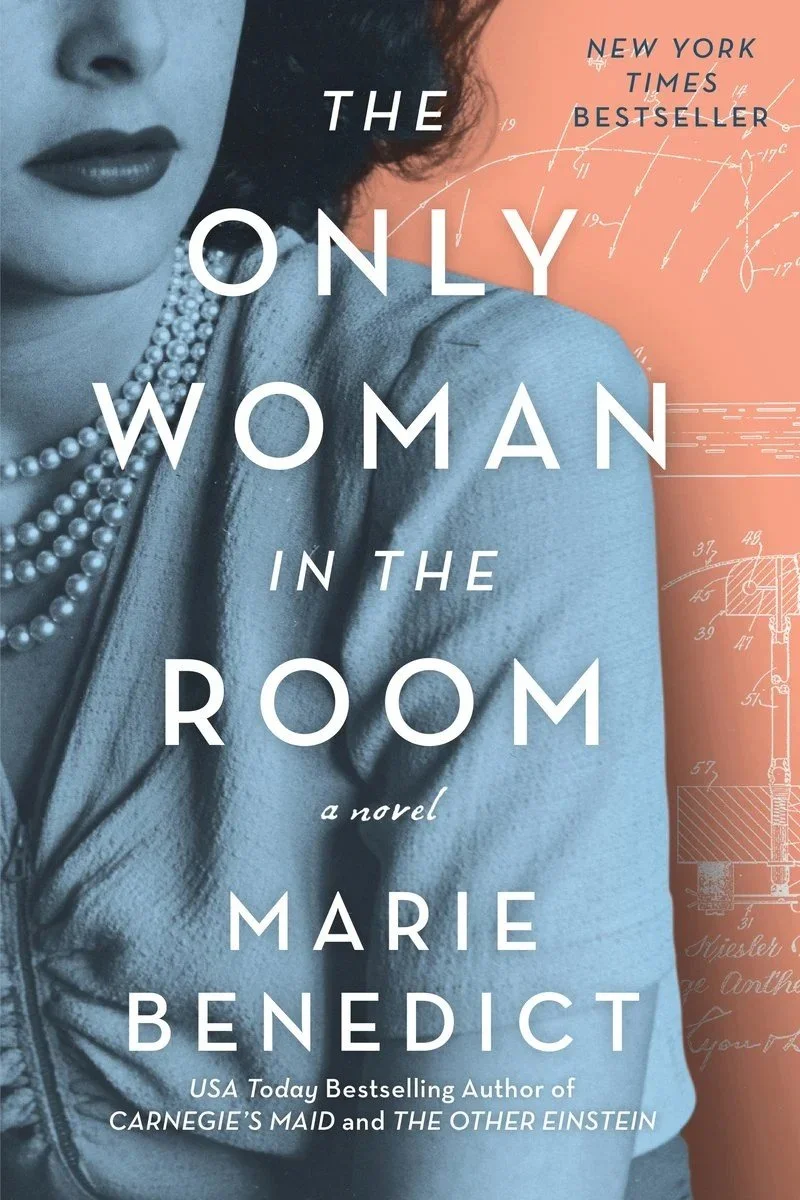
The Only Woman in the Room by Marie Benedict was the latest victim of my darling book club. The women in this group are smart, witty, and fierce, yet apparently incapable of obeying a calendar; our original meeting dates are more like polite suggestions that we collectively ignore. This month, we were "committed" to a Cinco de Mayo feast, but through the usual scheduling gymnastics, we finally found ourselves inhaling chips and salsa on the 22nd instead. Better late than never, we managed to put down our margaritas long enough to actually discuss the book.
Our reading patterns reveal a distinct penchant for formidable female protagonists endowed with profound insight; this month’s selection was no exception. The Only Woman in the Room chronicles the life of Hedy Lamarr beginning in her native Austria, where she and her compatriots sought to safeguard their homeland against the encroaching Third Reich. Hedy, then an accomplished stage actress, entered into a strategic marriage with a prominent arms dealer, aspiring to mitigate Nazi influence and shield her Jewish family from impending danger.
However, as her marriage descended into physical and psychological abuse and Nazi dominance became inescapable, Hedy fled to America to reclaim her creative agency. In the United States, she continued to impact the global conflict in extraordinary ways—from the personal act of adopting a Jewish orphan to the intellectual feat of inventing a frequency-hopping system designed to protect Allied vessels from torpedo strikes.
My evaluation of the novel evolved through two distinct lenses. Initially, reading with a focus on pure fiction, I perceived certain narrative gaps and a perceived lack of traditional plot progression. Yet, upon appreciating Marie Benedict’s commitment to historical accuracy, I began to view the work with renewed perspective. While some transitions—notably Hedy’s arrival in America—remain somewhat underdeveloped, I was ultimately captivated by the legacy of this intrepid woman. She was a pioneer who expanded the horizon of possibility for her gender, remained steadfastly devoted to her heritage, and authored technological advancements that fundamentally reshaped our modern world.
Ultimately, my engagement with this text was a multifaceted journey, proving to be an intellectual adventure as compelling as the history it sought to portray.
